

Education's biggest transformation isn't happening in classrooms. It's happening in algorithms, learning paths, and the quiet revolution of teaching every student differently.
The System Was Never Built for You
For decades, education has followed a simple formula: one teacher, one classroom, one syllabus, and one pace for everyone.It was engineered to produce predictable outputs at scale. A system where conformity was a feature, not a bug.
But we are no longer in that era.
Today's world demands people who think differently, adapt rapidly, and apply knowledge across contexts that didn't exist five years ago. And yet, millions of students are still moving through systems engineered for a world that no longer exists, evaluated on how well they memorize, not on how deeply they understand or how creatively they can apply.
The result? Brilliant students feel unchallenged. Struggling students fall behind in silence. And the majority in the middle move forward without ever being truly seen.
The one-size-fits-all model is not just ineffective. It is a systemic failure, and its time is up.
Walk into any B.Tech classroom in India and you will find the same scene: a professor delivering a lecture from slides that haven't changed in three years, students copying notes they will memorize the week before exams, and an entire room full of people going through the motions of education without the substance of it.
The traditional model rests on beliefs that simply don't hold up:
Assumption 1: All students learn at the same pace.
They don't. One student grasps pointers in twenty minutes; another needs the same concept explained from five different angles over three sessions. A uniform 50-minute lecture serves neither. It moves too fast for one and too slow for the other, and both leave without mastery.
Assumption 2: Exam scores measure engineering ability.
They don't. A student who scores 85 in Data Structures may not be able to implement a binary search tree from scratch. A student who scored 60 might write cleaner, more efficient code than their topper classmate. Marks measure memory under pressure. Industry measures what you can actually build.
Assumption 3: The same curriculum prepares everyone for the same industry. It can't, especially not in tech, where the frameworks, tools, and paradigms companies hire for today barely existed when most college syllabi were last updated. You are being trained for a job market that has already moved on.
The result is predictable: over 1.5 million engineering graduates every year in India, and a persistent, widening cry from employers, "These graduates aren't job-ready."
Great teachers have always adapted to their students, slowing down when confusion sets in, trying a different angle when the first explanation doesn't land. What's new is the ability to do this for every learner, at every moment, at scale.
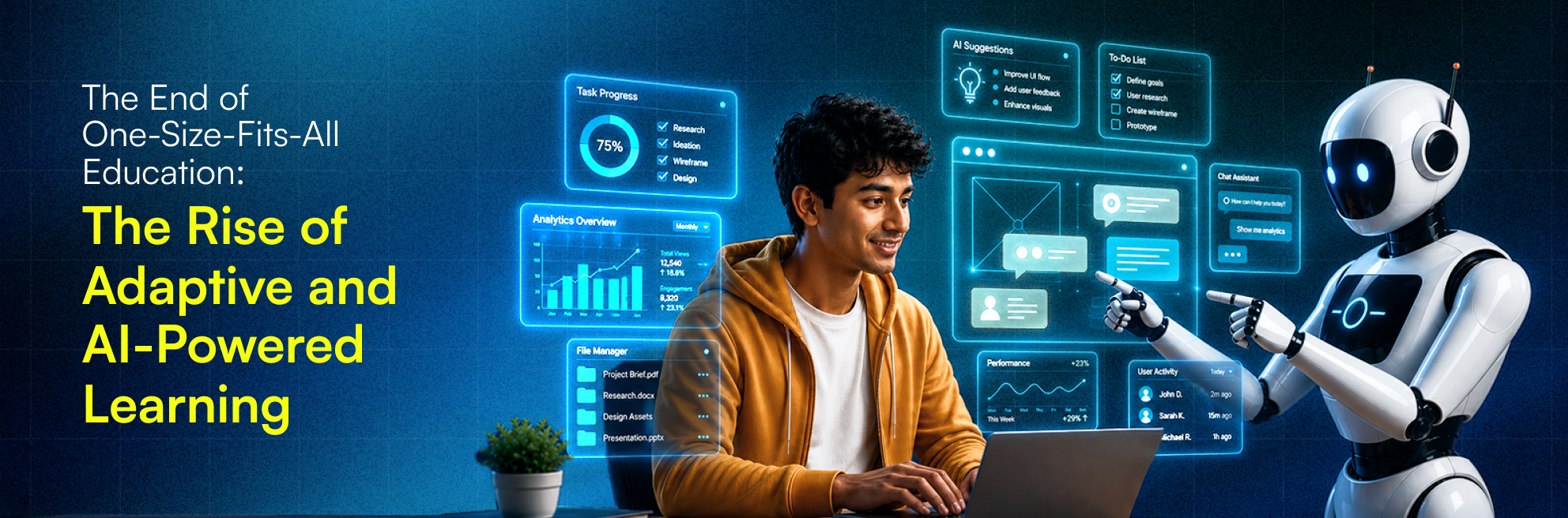
Adaptive learning platforms track how you learn, not just what you learn. They analyse your pace, your strengths and blind spots, your engagement patterns, and your progress over time then adjust content, difficulty, and support dynamically.
AI takes this further. Today's AI-powered systems act as intelligent learning companions that offer:
The evidence for this approach is growing. According to research done by engageli.com, students in AI-powered learning environments achieve 54% higher test scores, show 30% better learning outcomes, and experience 10 times more engagement compared to traditional methods.
A student struggling with logic gets additional foundational practice. A fast-mover gets pushed into real-world projects sooner. Neither is penalized for being different, because the system is built around them, not around a fixed syllabus.
This shifts education from content-centric to learner-centric. And for a country producing 1.5 million engineers a year, most of them from backgrounds, speeds, and confidence levels that no single classroom can serve, that shift is not optional. It is urgent.
Employers are no longer leading with transcripts. They lead with assessments, live problem-solving rounds, project walkthroughs, real-world simulations. They want evidence of what you've built, what problems you've solved, and how fast you can learn something new.
Your qualification opens a door. Your skills determine whether you walk through it.
The learner who graduates with a portfolio of real, demonstrable work will consistently outcompete the one with top marks who has never applied what they studied — every single time. The people already winning have found learning environments that mirror how the real world works: project-based, feedback-driven, and constantly current.
NxtWave was built for exactly this moment, for the B.Tech student who realizes that a degree alone may no longer guarantee career readiness.
The platform is designed around a simple reality: today’s learners need more than recorded lectures and theoretical knowledge. They need guided practice, real-world exposure, continuous feedback, and learning systems that adapt to their pace and potential.
What makes NxtWave's approach different goes beyond the technology. The pedagogy itself is built with every type of learner in mind:
Rather than treating AI as just another feature, NxtWave is integrating AI deeply into the learning experience to create a more adaptive, outcome-focused ecosystem for students.
From AI-driven doubt resolution and personalized coding assistance to intelligent assessments, adaptive practice systems, visual learning aids, and interview preparation tools, the platform is designed to support learners through every stage of their journey.
Some examples include:
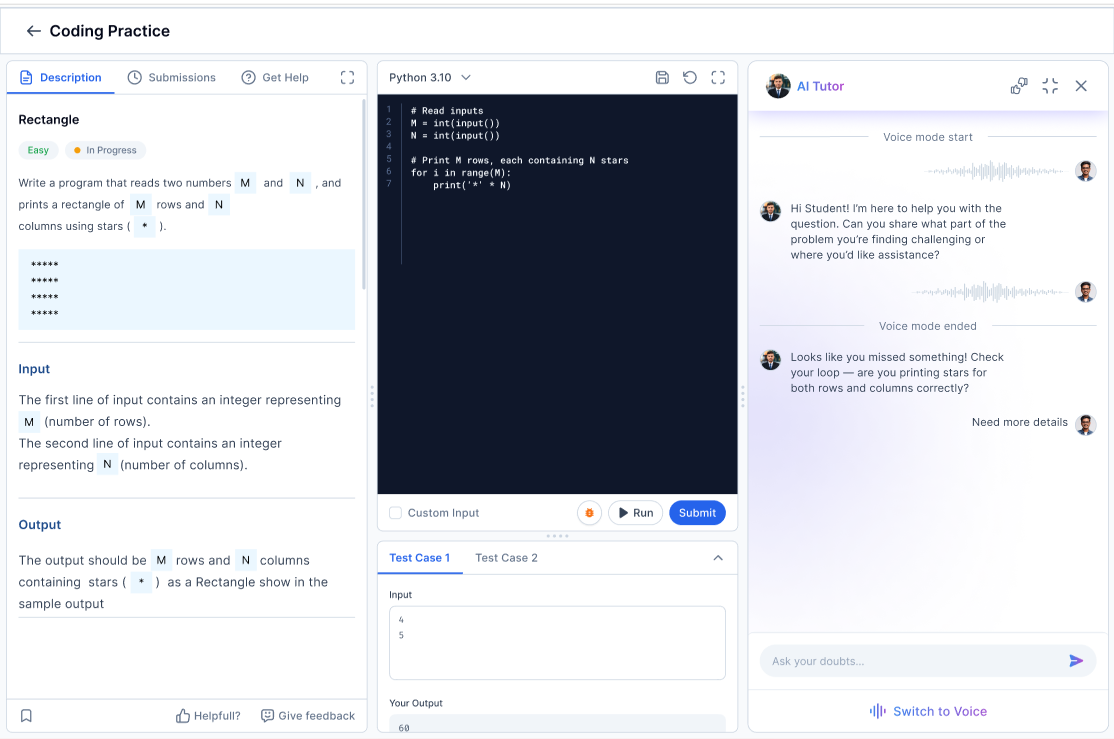
AI Tutor acts like an 24/7 intelligent mentor that guides students instead of simply providing answers. Rather than solving problems for learners, it asks thoughtful questions, offers hints, and encourages them to think through the solution on their own.
What makes an AI Tutor adaptive is its ability to tailor guidance based on a student's progress, and understanding. By leading learners step by step toward the answer, it helps them build stronger problem-solving skills, deeper conceptual clarity, and greater confidence in their abilities.
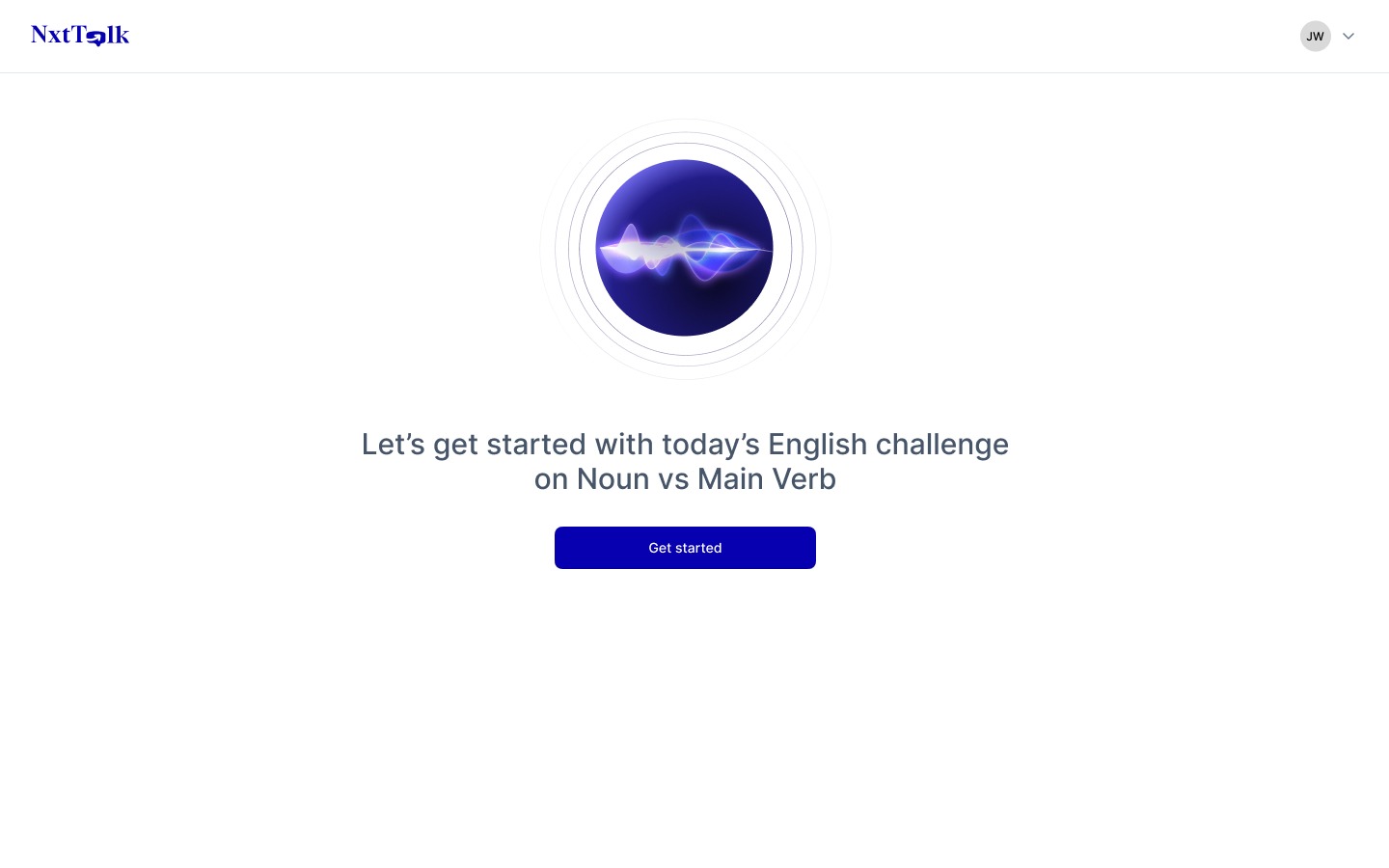
Many students hesitate to practice communication because they worry about making mistakes or being judged. NxtTalk provides a safe, AI-powered space where learners can have conversations freely and build confidence over time. It can even initiate discussions based on topics students have recently learned, helping them reinforce concepts through practice.
What makes NxtTalk unique is its personalized and adaptive approach. Students can switch topics, explore areas they are less confident in, and receive instant feedback on grammar, pronunciation, sentence structure, and fluency. With no fear of judgment, they can practice as many times as needed and steadily improve their communication skills.
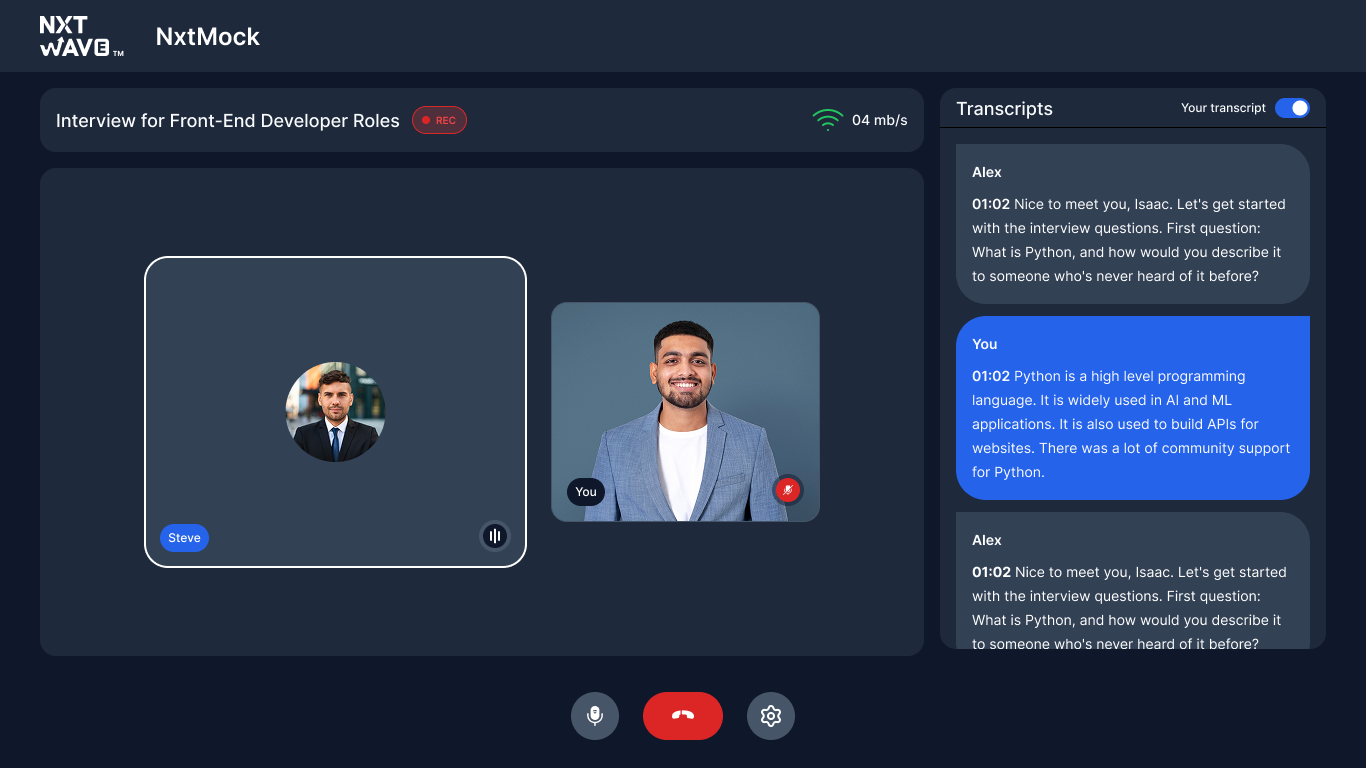
Preparing students for jobs requires more than teaching concepts, it requires simulating real hiring environments. NxtMock provides industry-aligned mock assessments that mirror actual recruitment rounds. Beyond scoring performance, it helps learners identify weak areas, understand where they struggle under pressure, and improve strategically.
And these are just a few examples within a much broader AI-powered learning ecosystem being built to make education more personalized, interactive, and career-focused.
Together, these systems create a powerful learning loop:
Learn → Apply → Assess → Identify Gaps → Improve → Test Again
This creates an adaptive ecosystem where the platform evolves with the learner’s journey instead of delivering the same experience to everyone.
When a recruiter asks, “What can you build? What problems can you solve?”, what will your answer be? For many students, the honest answer today is still: “My marksheet.”
But the future of hiring is shifting toward demonstrable skills, practical experience, and real capability.
That’s why learning ecosystems like NxtWave’s CCBP 4.0 and NIAT are becoming increasingly relevant. They are designed not just to help students complete courses, but to help them become industry-ready through AI-powered, adaptive, and outcome-driven learning experiences.
Because in the future of education, a degree may open the door, but skills, adaptability, and real-world readiness will determine how far you go.