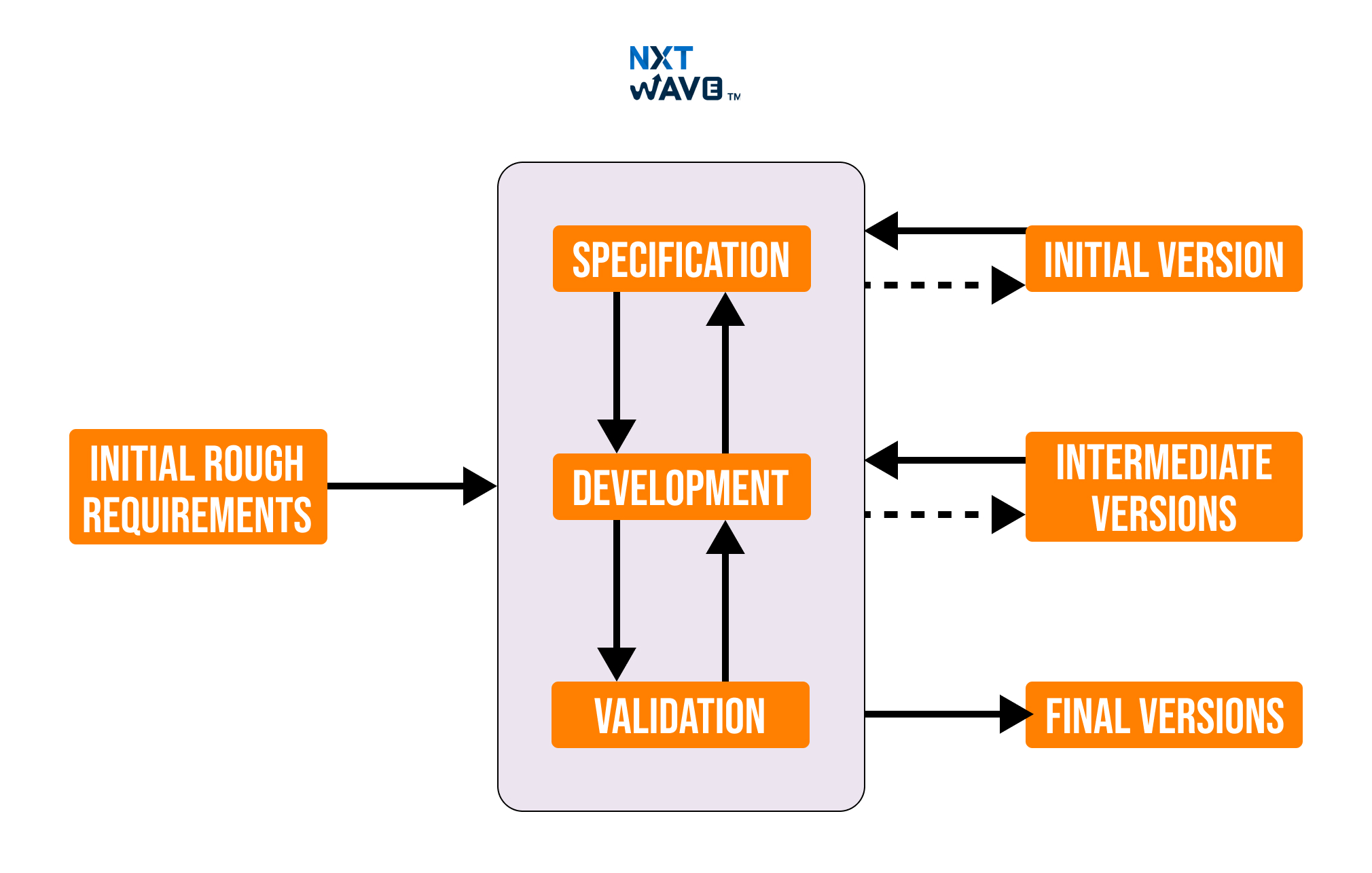
The evolutionary model in software engineering is a combination of the iterative and incremental development models. Instead of delivering the entire software system in one shot, this model follows a step-by-step approach. So, features are developed and improved using multiple iterations. The process begins after defining initial requirements and a basic system architecture, which can also evolve based on user feedback and changing needs. This makes the evolutionary model ideal for projects where requirements are not fixed and may be redefined during development. This article will explore evolutionary software development and its working principles, advantages, and use cases in detail.
What is the Evolutionary Model?
The evolutionary software process model divides development into incremental phases like mini waterfall cycles. At the end of each cycle, the users get access to the product to try and provide feedback. This feedback is then used to plan the next phase so that the software evolves over time to meet user expectations.
Unlike traditional models, where the final product is delivered after a long development period, the evolutionary model breaks down work into smaller, prioritised chunks. Each chunk is developed and delivered individually, so there are multiple incremental releases. With this approach, you can speed up the development process and have continuous customer involvement.
Classical Waterfall Model
The classical waterfall Model follows a rigid, step-by-step approach. Here the development moves in a sequence through phases like requirement gathering, design, implementation, testing, deployment, and maintenance. Once a phase is completed there is little chance for revisiting or modifying it. This model works well for projects with clearly defined requirements but struggles when changes are needed later in development
Iterative model
The Iterative Model focuses on developing the software in cycles. A basic version is built first and improved in multiple iterations. Each cycle involves planning, designing, coding, and testing, gradually refining the product. While this model accommodates changes better than the waterfall approach, it still assumes that core requirements remain stable throughout the process.
Incremental model
The Incremental Model begins by identifying key system requirements and dividing them into smaller, manageable features. These features are developed and delivered in increments, allowing partial product releases before full completion. While customer feedback is collected throughout, the model still requires a strong initial understanding of requirements for smooth execution.
Spiral model
The Spiral Model is designed for high-risk projects which combines iterative development with risk management. It progresses through repeated cycles where risks are identified and addressed before moving to the next phase. Spiral model is beneficial for projects with evolving requirements. But it can be resource-intensive due to its emphasis on risk assessment at each stage.
The waterfall model does not allow for changes to requirements during development. On the other hand, the Incremental model starts by figuring out the requirements ahead of time and breaks them into smaller features to be released gradually. While feedback from customers is collected during the process, which might lead to new or changed requirements, it still depends on identifying as many requirements as possible at the beginning.
The evolutionary model follows a process called “plan a little, design a little, code a little.” One of the biggest advantages of the evolutionary model is that customers gain confidence in the product since they receive working versions from the very beginning. They can verify and validate their requirements early and reduce the risk of major changes at later stages. Additionally, since work is divided into manageable parts, the model supports changing requirements without disrupting the entire development process.
Characteristics of the Evolutionary Model
The evolutionary development in software engineering has a few characteristics which show how it works:
1. Iterative and Incremental Development
Its iterative approach is at the core of the evolutionary model in software engineering. Each development cycle produces a working software version with new or improved features. The incremental process ensures that the product evolves, allowing continuous feedback and adjustments. By regularly reassessing user requirements and market trends, the model makes it easier to adapt to changes and refine the software at every stage.
2. Active User Involvement
The evolutionary model software engineering relies heavily on user participation. After each development cycle, feedback is collected from users or stakeholders. This input helps shape the next phase so the software improves based on real needs and expectations. Continuous user involvement makes the product more useful and aligned with changing requirements.
3. Flexibility and Adaptability
The model is designed to handle changes at any stage of development. Its flexible approach allows modifications based on new requirements or evolving project needs. This makes it perfect for projects where initial requirements are unclear or expected to change over time.
4. Risk Management
The risks of development are minimised by addressing uncertainties early in the development process. Its iterative approach allows critical issues to be identified and resolved in the initial stages, preventing major failures later. This step-by-step risk handling ensures a more stable and reliable final product.
5. Focus on Functional Components
Rather than developing the entire software at once, the evolutionary process model in software engineering prioritises building and refining individual functional components. Each part is developed, tested, and improved over multiple cycles, making the process more manageable and ensuring steady progress.
6. Continuous Testing and Integration
In the evolutionary software engineering model, testing and integration happen at every stage of development. Since the software is built in increments, each part is tested and integrated continuously. This helps detect and fix issues early, ensuring better software quality and stability.
Evolutionary Model: Step-by-Step Process
1. Rough Requirements Specification
The development process begins with gathering initial requirements. Instead of defining every small detail upfront, only the core functionalities and major goals are identified. Since user needs may change over time, this stage is kept flexible to accommodate future modifications.
2. Identify the Core and Other Parts to be Developed Incrementally
After outlining the basic requirements, the next step is to determine which features are essential for the first version and which features can be developed later. The core functionality is selected as the foundation of the software, and then the additional features are planned for incremental releases.
3. Develop the Core Part Using an Iterative Waterfall Model
The core part of the software is developed using a structured approach similar to the waterfall model. This is where stages like design, coding, and testing are followed in sequence. But the key difference is that unlike traditional waterfall development, the evolutionary model allows flexibility in later stages.
4. Collect Customer Feedback and Modify Requirements
Once the initial version is ready, it is shared with customers for feedback. Their inputs is used to refine existing functionalities and may also introduce new requirements. Based on this feedback, the development process goes back to the core part development before proceeding further to the next iteration.
5. Develop the Next Identified Features Using an Iterative Waterfall Model
With updated requirements in place, the next set of features is developed following the same iterative approach. This cycle of feedback and improvement continues until the software meets all user needs.
6. Maintenance
After the product is fully developed and deployed maintenance is established as an ongoing process. This includes fixing bugs, optimizing performance, and updating features to keep the software relevant and functioning over time.
The key takeaway is that the evolutionary model follows a dynamic approach where software evolves through multiple iterations by incorporating feedback at each stage. Instead of finalizing all requirements upfront, development progresses in cycles where specifications are refined, features are built, and functions are validated continuously. Early versions are released to users, which allows for real-world testing and adjustments. Thus, each iteration improves upon the last and finally leads to a product that aligns with user needs.
Application of Evolutionary Model
The evolutionary process models in software engineering can be applied to many scenarios, such as:
1. When Requirements Change Rapidly
The evolutionary model in software engineering is perfect for projects where user needs or market demands can change in no time. It allows the software to adapt continuously and the final product to meet the latest requirements and stay relevant.
2. Exploratory Projects
For projects with unclear problems or those requiring creative solutions, the model works well for exploration. Developers can try different approaches in the early stages and adjust the project direction based on early feedback and testing.
3. High-Risk Projects
In projects that face high uncertainty or risk, the evolutionary model helps identify and address risks early on. Tackling the most uncertain aspects early reduces the chances of major project failures down the line.
4. Customer-Centric Applications
The evolutionary model performs well when a project needs close collaboration with customers or end-users. Regular feedback from users helps the product evolve in line with their preferences.
5. Technology Integration Projects
In projects that involve new or unfamiliar technologies, the evolutionary model allows for a gradual and controlled approach. This helps developers better understand the technology's impact and reduces the risks of integration failures.
6. Fast-Moving Industries
The evolutionary model offers the flexibility needed to stay ahead for industries like technology and media, where trends and technologies change quickly. It helps teams rapidly adapt to new technologies or market shifts, keeping the product relevant.
Comparison of the Evolutionary Model With Other Models
Here’s a comparison of the evolutionary prototype model in software engineering with other models:
Evolutionary Model vs Waterfall Model
| Evolutionary Model |
Waterfall Model |
| Allows continuous changes during development |
Rigid, does not allow changes once development starts |
| High, users provide feedback after each iteration |
Low, users only see the product after completion |
| Risks are identified and handled early in development |
Risks are addressed late, mostly during testing |
| Delivers working versions incrementally |
Delivers the final product only at the end |
Evolutionary Model vs Incremental Model
| Evolutionary Model |
Incremental Model |
| Adapts to changing requirements throughout development |
Works with mostly predefined requirements |
| Continuous feedback is used to refine development |
Feedback is incorporated at planned stages |
| High-risk components are addressed early |
Risks are handled incrementally, but may still emerge later |
| Releases functional versions at every cycle |
Adds predefined features in structured increments |
Evolutionary Model vs Iterative Model
| Evolutionary Model |
Iterative Model |
| Develops a core system first, then evolves it over time |
Repeats the entire development cycle multiple times |
| High, users provide feedback after each version |
Users provide feedback at the end of each iteration |
| Handles risks by developing core functionalities first |
Reduces risks through repeated refinements |
| Adapts continuously based on feedback |
Can adapt in each iteration, but follows a structured process |
Evolutionary Model Vs Spiral Model
| Evolutionary Model |
Spiral Model |
| Risks are identified and managed in early phases |
Focuses on risk assessment in every spiral phase |
| High, users test and provide feedback frequently |
Users are involved mainly at major checkpoints |
| Evolves through continuous improvements |
Follows distinct risk analysis, planning, and development phases |
| Projects with evolving requirements and customer involvement |
Complex, high-risk projects requiring detailed risk evaluation |
Conditions for Implementing the Evolutionary Model
The evolutionary model is chosen over other software development models when the expectation is flexibility, adaptability, and incorporation of continuous user feedback. Below are key scenarios where it is the best approach:
1. When Requirements are Unclear or Keep Changing
If project requirements are not fully defined at the start or are expected to change frequently, the evolutionary model is more suitable than the Waterfall model. This is because the waterfall model requires a fixed set of requirements before development begins.
2. When Continuous User Feedback is Necessary
Evolutionary model is more suited for projects where customer involvement is crucial, such as user-centric applications and experimental software. Unlike the Incremental model which collects feedback only at certain stages, the evolutionary model enables ongoing improvements based on real-time feedback.
3. When the Project Involves High Risks or Uncertain Technologies
If a project involves new or evolving technologies, the evolutionary model helps in mitigating risks. It does so by gradually developing and testing core components first. The Spiral model also addresses risks but is more complex and resource-heavy. To keep the development light, the evolutionary model is chosen.
4. When the Market is Fast-Paced and Requires Quick Adaptation
In industries like e-commerce, fintech, and mobile applications, where market demands change rapidly, the evolutionary model allows software to be continuously refined. This is where it’s chosen over the Iterative model, which follows a more structured cycle of iterations.
Advantages and Disadvantages of Evolutionary Model
Here are some of the pros and cons of the evolutionary model in software engineering:
| Advantages |
Disadvantages |
| Users can test the software in stages before the final release. It allows early issue detection and better quality. |
Breaking down the problem into manageable units that meet user acceptance can be challenging, leading to delays. |
| The core module is tested first. It reduces the chances of errors in the final product. |
Incremental implementation based on user feedback can slow down the overall development process. |
| Works well for large-scale projects where development happens in phases. |
There is a risk of delayed final product delivery due to continuous modifications. |
| Features can be added, removed, or modified based on customer feedback and evolving requirements. |
Constant reporting and regular feedback loops require ongoing communication with customers. |
| After every cycle, users gain access to the product. This allows for more precise feedback and refinements. |
|
Conclusion
Understanding models like the Evolutionary Model is crucial for students venturing into the software development world. As technology evolves rapidly, being familiar with various development models and approaches will help you adapt to different project needs. For students looking to become job-ready, joining the CCBP 4.0 Academy program can provide you with the skills and knowledge required to excel in the tech industry. Join now to learn more and become job-ready to get a competitive edge.
Frequently Asked Questions
1. What is the Evolutionary Model in Software Engineering?
The evolutionary model is a development approach where software is built and improved in small, incremental stages. Each stage allows for user feedback and adjustments so the final product meets their needs.
2. How does the Evolutionary Model help in managing changing requirements?
The evolutionary model allows flexibility by incorporating user feedback after every iteration. Hence, it becomes easy to adapt to changing needs, and the product stays relevant throughout development.
3. Can the Evolutionary Model be used for large projects?
Yes, the Evolutionary Model works well for large-scale projects. It helps break down the development process into manageable chunks, allowing for easier control and timely adjustments.
4. What are the main advantages of the Evolutionary Model?
The model provides early user feedback, reduces errors, and ensures continuous product improvement. It also helps in understanding client needs better as development progresses.
5. What are the challenges of using the Evolutionary Model?
The main challenges include difficulty in dividing the work into manageable units, potential delays in final delivery, and the risk of continuous customer reporting and requirement changes.




.avif)