



Introduction: Why Hiring Fresh Graduates is Key for Your Organization's Growth
In a rapidly evolving tech landscape, hiring fresh graduates isn’t just a budget-friendly choice; it’s a strategic move. For both startups and Global Capability Centers (GCCs), freshers bring new perspectives, adaptability, and a digital-native mindset that can be harnessed for innovation and long-term growth.
More than just filling seats, fresher recruitment is about cultivating talent aligned with your business’s future needs. While experienced professionals bring domain expertise, fresh graduates offer the energy and willingness to learn, which are the key attributes in a fast-paced industry.
With the right approach, recruiting fresh graduates can help you build a team that is cost-effective, agile, and future-ready.
Unique Challenges of Hiring Fresh Graduates
Hiring freshers, especially in technical roles, comes with its fair share of complexities. One of the most common hiring challenges is identifying true potential in candidates who may lack industry experience. For startups, limited budgets and brand recognition make it harder to attract top-tier fresh talent. For GCCs, aligning global processes with local talent readiness is often a hurdle.
In 2025, hiring trends are increasingly favoring skills over degrees. However, the tech hiring challenges remain:
- A growing skills gap between what academia teaches and what the industry demands.
- Unrealistic salary or role expectations from freshers.
- Misalignment between a fresher’s mindset and workplace readiness.
But here’s the truth: hiring fresh graduates with no experience doesn’t mean settling for less. It means choosing someone you can shape into a high-performing professional.
How Startups Can Benefit from Hiring Fresh Graduates
For startups operating with lean teams and limited budgets, hiring fresh graduates can be a game-changer. Freshers bring a unique combination of enthusiasm, adaptability, and a willingness to learn, making them well-suited for fast-paced environments where roles evolve quickly.
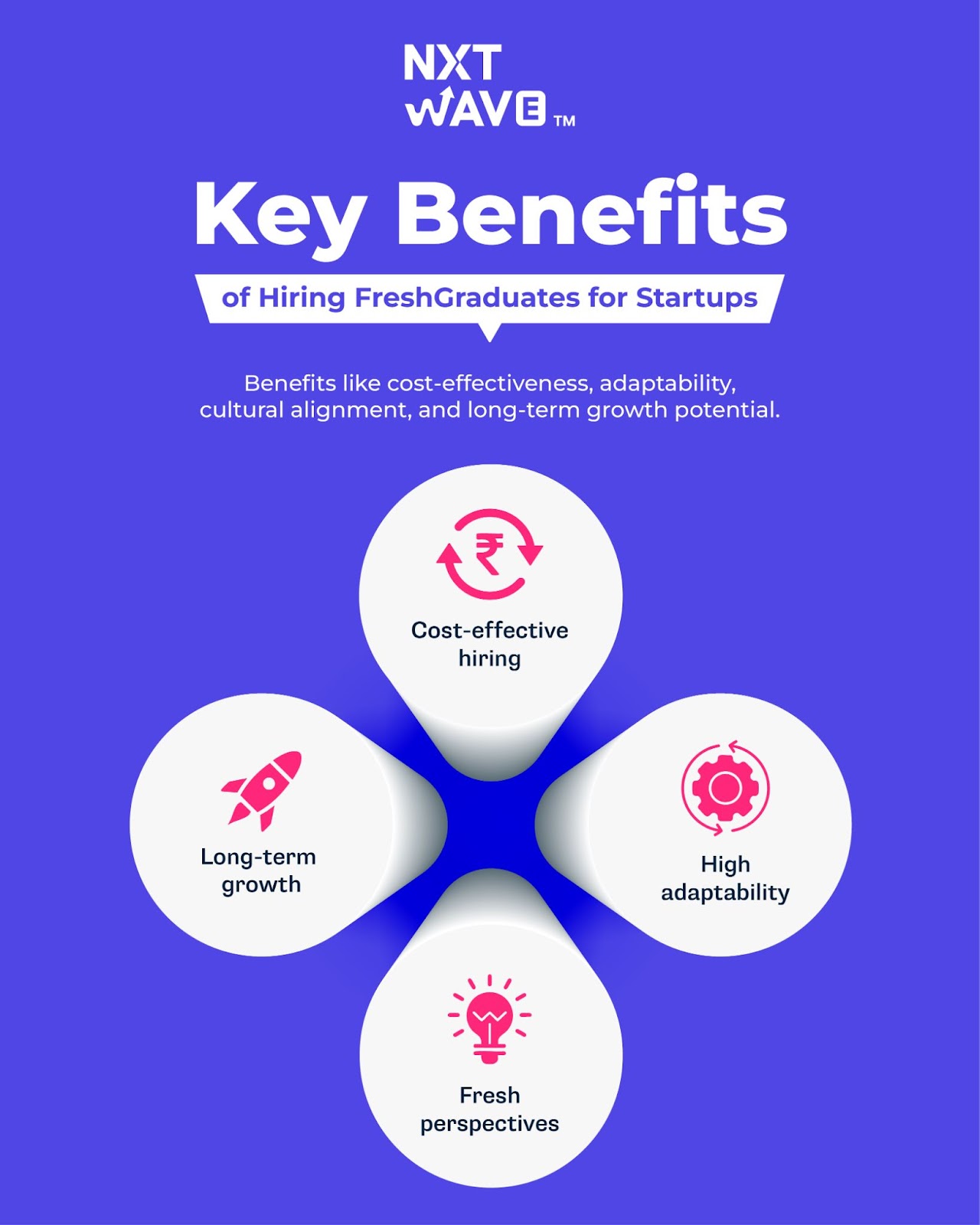
Key benefits include:
- Cost-effective hiring: Freshers typically come with lower salary expectations, helping startups manage tight payrolls without compromising on talent quality.
- High adaptability: With no prior workplace conditioning, they quickly adjust to startup workflows and are more receptive to feedback and rapid iteration.
- Fresh perspectives: Being digital natives, they often offer creative, unfiltered solutions that challenge conventional thinking.
- Stronger cultural alignment: Freshers are more open to embracing startup values, fostering a collaborative and mission-driven environment.
- Long-term growth potential: Early-career hires tend to grow with the organization, making them valuable assets for future leadership roles.
Startups that invest in fresh graduate talent build not just a team but a future-ready workforce that scales with their vision.
Effective Hiring Strategies for GCCs
As innovation-driven hubs, GCCs can build future-ready teams by investing in fresh graduates. With proper structure, freshers offer scalability, cultural adaptability, and long-term retention.
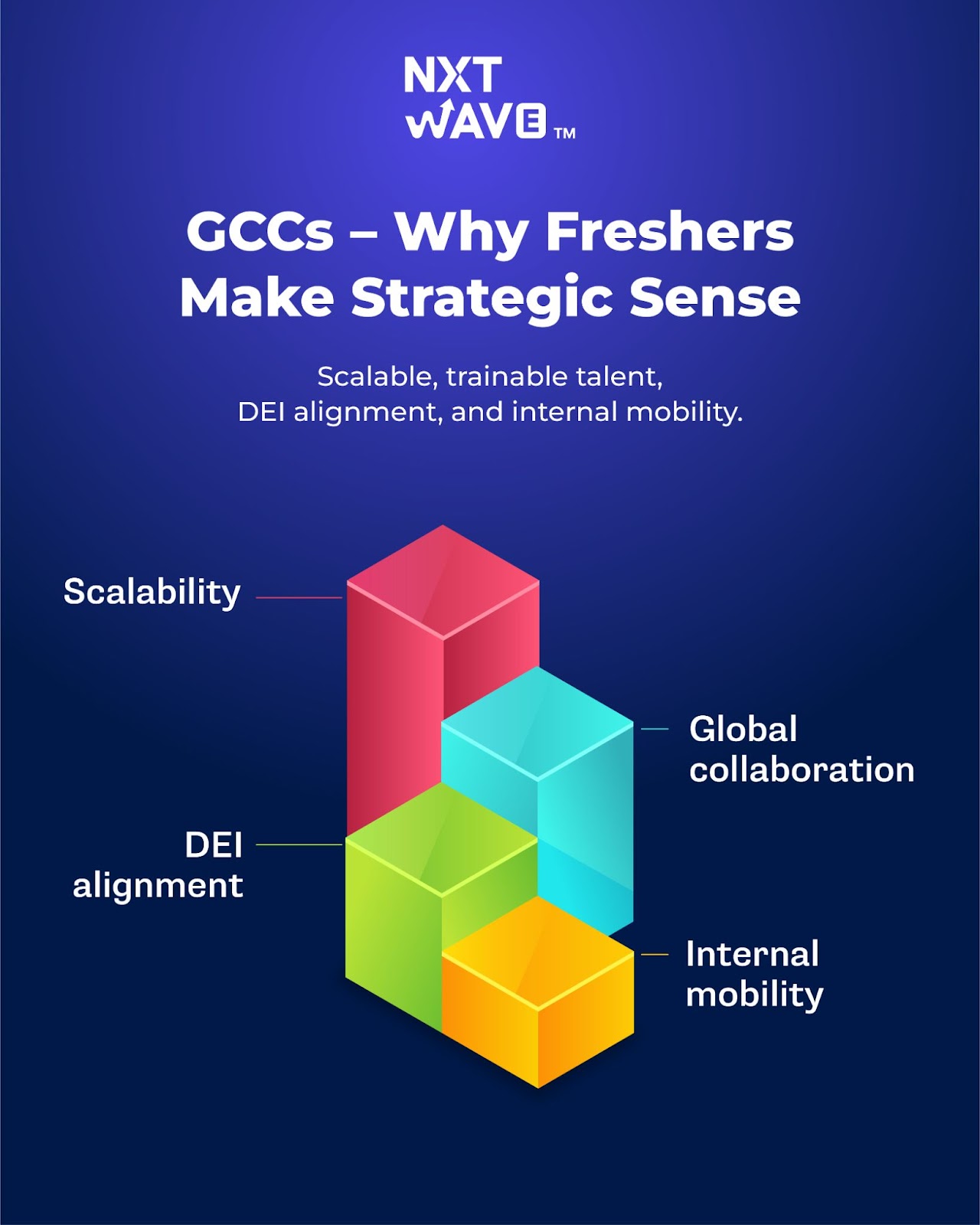
Why it works for GCCs:
- Cost-effective scale-up: Trainable talent with high growth potential.
- Global collaboration readiness: Digital-native freshers adapt quickly to cross-cultural workflows.
- Stronger internal mobility: Early hires often stay and grow within the system.
To streamline fresher hiring, GCCs should:
- Engage Tier 2/3 colleges and tech upskilling platforms to tap wider talent pools.
- Build structured graduate programs with rotations, mentorship, and global exposure.
- Align hiring with DEI goals, leveraging skill-based assessments for unbiased selection.
- Strengthen employer branding on channels like LinkedIn, Instagram, and YouTube to connect with Gen Z talent.
Freshers see GCCs as career launchpads; by offering learning paths, global visibility, and an inclusive culture, GCCs can build a loyal, high-performing workforce from the ground up.
The Key Steps in the Fresher Hiring Process
A well-structured fresher recruitment process isn’t just about filling junior roles; it’s about identifying high-potential candidates who can grow with your company. Unlike experienced hiring, where resumes and track records speak volumes, hiring fresh graduates demands a more thoughtful, nurturing, and strategic approach.
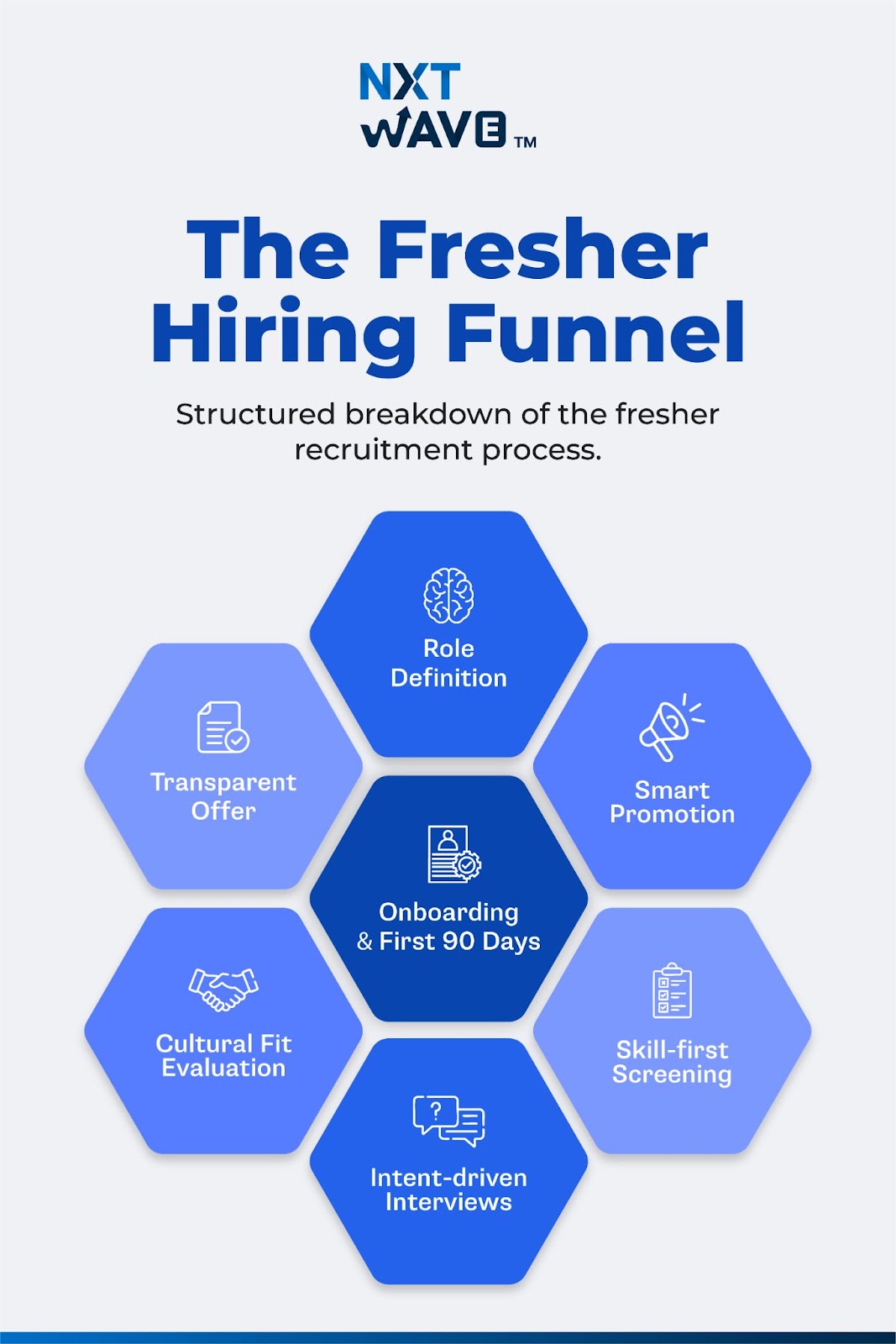
Here’s a detailed breakdown of what the ideal fresher hiring workflow should look like:
Define the Job Role with Precision
Avoid vague titles like 'Graduate Trainee' or 'Junior Developer'. Instead, specify the core responsibilities, required skills, and technologies they’ll work with. Freshers rely heavily on job descriptions to assess fit, so clarity here goes a long way.
Example: Instead of 'Software Intern', use 'Backend Intern (Node.js + MongoDB) – 6 months with PPO'.
Mention the learning curve, mentorship availability, and tools/technologies involved to set realistic expectations.
Promote the Opportunity Where Freshers Look
Fresh graduates might not visit the same platforms as senior professionals. Expand your outreach to where they are:
- College placement cells
- Upskilling platforms
- Social media channels (LinkedIn, Instagram, and Telegram groups)
- Online job boards with fresher filters
- Career fairs and webinars
Highlight your company culture, learning environment, and career path, not just the role.
Smart Screening: Go Beyond the Resume
Most fresh graduates have similar academic backgrounds, so screening solely on marks or degrees won’t reveal much. Instead, assess:
- Skill-based assessments (MCQs, coding tasks, case studies)
- Portfolio or project evaluations
- Aptitude tests for logical thinking and problem-solving
- Video introductions to gauge communication skills
Use automation tools to streamline this step and ensure unbiased, data-backed shortlisting.
Interview with Intent and Empathy
Your interview strategy should focus on attitude, learning potential, and alignment with your company’s values.
Here’s how to structure the interview:
- Round 1 – Skill Validation: Basic technical or functional interview.
- Round 2 – Soft Skills + Culture Fit: Ask situational questions to assess adaptability, communication, and teamwork.
- Round 3 – Career Alignment: Understand their career goals and how your opportunity fits.
Look for:
- Curiosity and willingness to learn
- Openness to feedback
- Growth mindset
- Problem-solving approach, not just right answers
Evaluate Cultural Fit Early
Freshers thrive in environments where they feel included and guided. Ask behavioral questions or use personality assessments to evaluate:
- How well they'll adapt to your work culture
- Their approach to collaboration and ownership
- Openness to mentoring and structured feedback
This step is especially crucial for startups, where each hire significantly influences team dynamics.
Offer Clarity and Communicate Value
Once you've selected the candidate, make your offer transparent and engaging. Include:
- Compensation and perks
- Learning roadmap (courses, certifications, mentorship)
- Growth opportunities (PPO, promotions, role transition)
- Onboarding timelines
Your offer should stand out not just in salary but in experience and vision.
Plan a Solid Onboarding and First 90 Days
Onboarding is more than paperwork. A successful fresher onboarding strategy includes:
- Introduction to team and tech stack
- Assigned buddy or mentor
- Goal-setting for the first quarter
- Feedback sessions every 2–4 weeks
Freshers who feel supported from Day 1 are 3x more likely to stay long-term.
Whether you're designing a graduate hiring process for a GCC or building a fresher recruitment funnel for a startup, the key lies in clarity, structure, empathy, and early engagement. Invest in each stage, and you'll not only hire smarter; you'll build a future-ready workforce.
Selecting the Right Hiring Channels for Fresh Graduate Recruitment
With your fresher hiring framework in place, the next critical step is choosing the right channels to source candidates. In today’s highly competitive hiring landscape, where every brand is vying for the attention of digitally savvy graduates, your sourcing strategy can make or break your recruitment outcomes.
Finding freshers who are job-ready and aligned with your company’s vision requires going beyond traditional job boards. It’s about discovering candidates who are not just looking for their first job but are actively preparing for it.
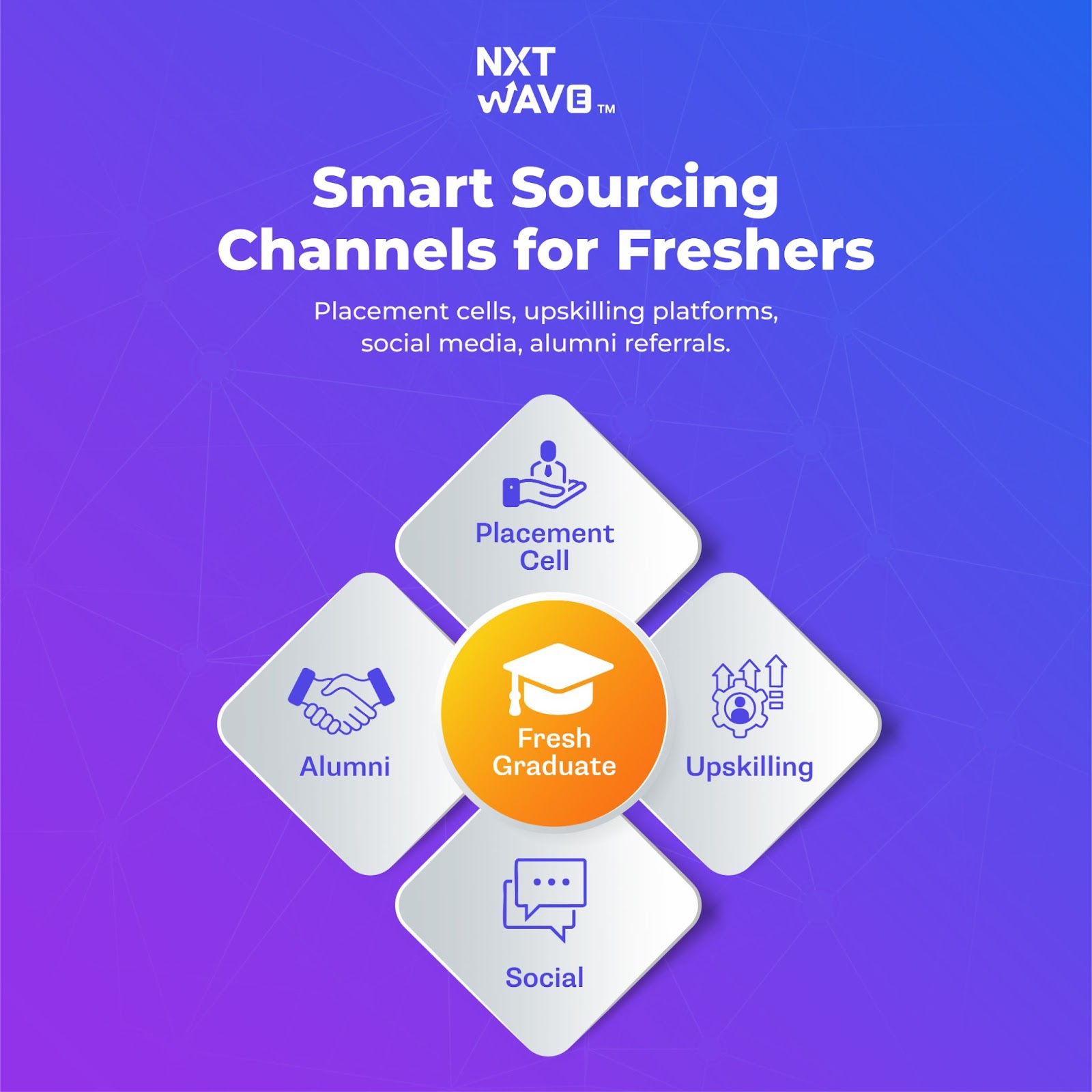
The most effective fresher recruitment strategies tap into:
- Campus engagement through college placement cells, especially when timed well and customized to each institution’s strengths.
- Upskilling communities and learning ecosystems where students are proactively bridging the gap between classroom knowledge and industry expectations.
- Social media and digital-first platforms where fresh graduates spend time discovering career opportunities, learning from peers, and following companies they admire.
- Referral and alumni pipelines, particularly when you’ve already hired recent graduates who can act as ambassadors for your company.
The goal is to interact with freshers in environments where they’re already motivated to grow, instead of waiting for them to discover your job post on a generic portal.
Why Startup-Friendly Hiring Channels Make a Difference
Startups and agile teams benefit most from hiring channels that prioritize quality over quantity and efficiency over volume. These channels don’t just deliver resumes; they surface candidates who are enthusiastic about fast-paced work cultures, eager to learn on the job, and ready to take ownership from day one.
When choosing a fresher hiring partner, it’s important to look beyond the usual metrics of reach or database size. Instead, ask:
- Are these candidates already showing initiative by learning new technologies?
- Do they understand modern workflows like agile, product thinking, or collaboration tools?
- Have they demonstrated curiosity, commitment, or a portfolio of applied skills?
Platforms that can connect you with pre-trained, motivated, and workplace-ready talent bring exponential value to lean hiring teams.
How to Use Digital Platforms for Cost-Effective Recruitment
For both startups and GCCs, digital hiring channels offer a high-ROI alternative to expensive campus drives or lengthy offline outreach. When used smartly, they become more than just sourcing tools; they’re a gateway to building a strong employer brand among freshers.
Here’s how to optimize your digital recruitment strategy:
- Meet freshers where they’re active: Whether it’s through social media reels, tech webinars, or online communities, today’s graduates engage with content-rich, value-driven platforms. These are perfect spaces to highlight your company’s learning culture, growth stories, and early-career success paths.
- Use skill-first shortlisting: Move away from CGPA cutoffs and generic resumes. Instead, focus on platforms that provide project-based assessments, coding evaluations, or real-world problem-solving tests. This ensures you shortlist candidates based on capability, not credentials.
- Share your story: A clear employer brand narrative, especially one that highlights mentorship, learning opportunities, and a supportive culture, can turn a fresher’s curiosity into a job application. Make your company feel approachable and future-focused.
What sets successful recruiters apart is not just where they look but how intentional they are about engaging fresh talent. Hiring platforms that align with this mindset don’t just help you fill roles; they help you build future leaders.
As more companies move toward skill-centric hiring, a new generation of platforms has emerged; ones that don’t just source resumes but nurture talent aligned with Industry 4.0 standards. These platforms are becoming the go-to choice for forward-looking teams who want to recruit fresh graduates with job-ready tech skills, workplace awareness, and long-term potential.
NxtWave’s Role in Bridging the Gap Between Academia and Industry
As the hiring landscape evolves toward skills-first recruitment, employers, especially those focused on startup hiring and GCC recruitment, need more than just access to candidates; they need access to job-ready freshers. This is where NxtWave emerges as a strategic partner for companies navigating the fresher recruitment process.
NxtWave transforms students and recent graduates into industry-ready professionals. Through its outcome-driven programs, NxtWave ensures that learners not only gain technical expertise but also develop critical thinking, workplace communication, and collaboration.
Why employers trust NxtWave for hiring fresh graduates:
- Pre-vetted, job-ready talent: NxtWave learners go through intensive training and project-based learning, making them ready to contribute from day one; a major advantage when hiring fresh graduates with no experience.
- Industry-aligned curriculum: Created with input from tech leaders, it reflects tools and workflows relevant to both startups and GCCs.
- Smart screening options: Employers can view detailed candidate profiles including skill validation, real-world projects, and soft skill evaluations, which are critical for improving outcomes in the graduate hiring process.
- Efficient and scalable hiring: Whether you're recruiting for one role or running a full-scale hiring process, NxtWave ensures speed, accuracy, and alignment with your goals.
By partnering with NxtWave, companies eliminate the delay of training after hiring. Instead, they gain access to professionals who already understand the demands of modern tech roles, especially important when dealing with tech recruitment challenges and solutions in today’s competitive landscape.
In 2025, when hiring and recruitment challenges in India are at an all-time high, the ability to hire trained freshers at scale becomes a strategic edge. With NxtWave, companies from agile startups to expanding GCCs can streamline the way they hire, accessing a pipeline of industry-ready, pre-trained talent that’s tailored to their unique business needs.
Conclusion: Building a Future-Proof Workforce
Hiring fresh graduates is not just about filling entry-level roles; it’s about investing in your company’s future. Whether you’re a lean startup building from the ground up or a mature GCC scaling with precision, freshers bring unmatched energy, adaptability, and long-term growth potential.
By focusing on skills, cultural alignment, and structured onboarding, you can transform fresh talent into high-performing teams. And by choosing the right hiring partners, especially platforms that offer pre-trained, industry-ready candidates, you streamline the process without compromising on quality.
The future of hiring is not about experience; it’s about potential.
FAQs:
1. What are the best channels for fresher recruitment?
College placement cells, tech upskilling platforms like NxtWave, social media, and alumni networks are highly effective channels.
2. How can I hire freshers without experience?
Use skill-based assessments, project portfolios, and aptitude tests to evaluate potential over experience.
3. How do I hire freshers in a startup with limited funds?
Focus on platforms like NxtWave that offer cost-effective recruitment, pre-trained candidates and emphasize growth opportunities and culture in your pitch.
4. What is the recruitment process for freshers?
It includes role definition, smart sourcing, skills-first screening, structured interviews, culture fit evaluation, transparent offers, and robust onboarding.
5. What are the hiring challenges in 2025?
A widening skill gap, misaligned expectations, and the need for faster, more targeted recruitment strategies.