Top 15 HR interview questions for Deloitte
Here are some of the HR interview questions you can expect at Deloitte:
1. Tell me about yourself.
Sample Answer:
Thank you for giving an opportunity to introduce myself. My name is Deepthi, and I was born and raised in Hyderabad. I hold a Bachelor's degree in Computer Science and Engineering from XYZ University. I consider myself a hardworking, self-motivated individual who thrives in collaborative settings. My key strengths are my work ethic and ability to connect with others to achieve shared goals. However, I do recognize that I tend to trust people easily, which I view as both a strength and a potential area for growth.
2. Why do you want to join Deloitte?
Sample Answer:
I am excited about the prospect of joining Deloitte because I know it will offer me the opportunity to face new challenges and grow professionally. Deloitte is a global leader with a strong reputation, and I believe that working here will allow me to apply my skills in meaningful ways while advancing my career.
3. What do you know about Deloitte’s services and industry?
Sample Answer:
Deloitte is a global leader in professional services, offering a range of solutions across audit, tax, consulting, and financial advisory. Their financial advisory services include M&A support, restructuring, valuation, and forensic investigations. They help clients unlock value in transactions, manage financial distress, and resolve disputes.
Deloitte’s consulting covers areas like technology transformation, human capital, and operations. Their audit and assurance services ensure financial transparency, while tax services assist with compliance and strategy. Deloitte serves various industries including financial services, healthcare, energy, technology, and more, with a global presence in over 150 countries.
4. How do you handle working under pressure and tight deadlines?
Sample Answer:
I approach tight deadlines as an opportunity to demonstrate my ability to prioritize tasks and deliver quality results efficiently. By employing effective time-management strategies and remaining calm under pressure, I can ensure that deadlines are met without sacrificing quality.
5. Will you work under a bond of two years?
Sample Answer:
Yes, I would be happy to sign a two-year bond, provided that this position aligns with my career goals and allows me to grow professionally. I believe that if I am the right fit for the role, I will bring value to your team, and I am committed to contributing to the company's success.
6. Explain how you would be an asset to this organization.
Sample Answer:
I bring strong communication skills, a positive attitude, and a solid work ethic to any role I take on. I am confident that my ability to engage with team members, solve problems efficiently, and approach tasks with enthusiasm will make me an asset to your organization. I’m eager to leverage my skills and contribute to the growth and success of the company.
7. How do you feel about working nights?
Sample Answer:
I am open to working night shifts or additional hours if it contributes to the success of the company. I believe that hard work and flexibility are key to achieving team goals. If such shifts are required, I would appreciate the support of appropriate compensation and transportation arrangements.
8. What are your long-term career goals and how do you see yourself growing at Deloitte?
Sample Answer:
My long-term career goal is to [mention career aspiration], and I see Deloitte as an ideal place to pursue this goal. The firm's commitment to professional development and diverse opportunities align well with my aspirations, and I'm excited about the potential for growth and learning at Deloitte.
9. Can you work under pressure?
Sample Answer:
Yes, I can work well under pressure. I believe that pressure can bring out the best in a person, as it encourages focus and efficient problem-solving. I have faced tight deadlines before and have always managed to stay calm, organize my tasks, and complete the work on time.
10. Are you ready to relocate?
Sample Answer:
Yes, I am open to relocation if the role requires it. I believe this position and company are a great fit for me, and I am willing to make the necessary adjustments to contribute to the organization.
11. What are your plans for higher studies?
Sample Answer:
At this moment, I am focused on gaining hands-on experience and contributing to the company. I am open to further education if it aligns with my professional development. I see every learning opportunity as a chance to improve my skills and enhance the value I can provide to the organization.
12. Do you have any questions for us?
Sample Answer:
Yes, I do. Could you please share what the next steps in the recruitment process will be? I would love to know what to expect moving forward.
13. Why have you changed jobs so frequently?
Sample Answer:
I was eager to explore different roles to find the best fit for my skills and interests. However, after researching your company and reviewing the job description, I am confident that this position is aligned with my career goals and skill set. I believe I can contribute effectively and grow within this role.
14. What is the most difficult situation that you have ever faced in life?
Sample Answer:
One of the most challenging situations I faced was when I had to manage a new technological domain in one of my projects. While I had a technical background, I initially struggled with understanding the specific requirements. Fortunately, my manager was supportive and allowed me extra time to gain proficiency. Over time, I became an expert in the area, which allowed me to guide and support my colleagues.
Bottom Line: HR rounds test motivation, communication, values, and whether you fit Deloitte’s collaborative, high-performance culture.
Ethics and Professional Values at Deloitte
Deloitte places a strong emphasis on ethics and professional values, seeking candidates who demonstrate integrity, transparency, empathy, and a commitment to collaboration in the workplace. During the interview process, you may be asked questions designed to assess how you handle ethical dilemmas and whether your professional values align with Deloitte’s standards.
Common Ethics and Professional Values Interview Questions
- Describe an instance where you faced an ethical dilemma at work and how you resolved it.
Interviewers want to understand your decision-making process when confronted with conflicting interests or challenging situations. When answering, highlight how you identified the ethical dilemma, considered the consequences, and took action that reflected integrity and transparency. - How do you demonstrate empathy and collaboration in your professional relationships?
Deloitte values a collaborative work environment where empathy enables stronger teamwork. Use examples that showcase your ability to understand others’ perspectives, support colleagues, and work together to achieve shared goals. - Can you provide an example of a time when you had to be transparent about a mistake or difficult situation?
Transparency builds trust. Discuss a situation where you communicated openly about a challenge or error, took responsibility, and worked collaboratively to find a solution.
How to Approach Ethics and Professional Values Questions
While answering these questions, you could think about the STAR method (Situation, Task, Action, Result) to arrange your answers.
- Collaboration: Explain the times when you collaborated with others to sort out ethical issues or to elevate the work environment culture.
- Empathy: Demonstrate your capability to understand the needs and worries of the co-workers or clients and to give them a suitable response.
- An ethical dilemma: Point out the ethical dilemma in detail, the choices you weighed, and the reason for your decision.
- Transparency: Indicate how the use of trust through open communication and honesty directed your choices and was the basis for the relationship of confidence in your team.
Key Takeaways So Far
- Leadership is about making others capable, not only guiding.
- Examples of teamwork should include empathy and respect for others.
- Risk assessment is an evidence of being proactive in stakeholder management.
Handling Pressure and Deadlines
Deloitte interviewers often assess your ability to manage workload, meet tight deadlines, and maintain high performance under pressure. Success in these areas requires strong task organization, effective communication, and strategic use of resources. Expect questions that explore your experience with project plans, setting personal targets, delegating tasks, and handling risks while maintaining a scheduled timeline and budget.
Common Handling Pressure and Deadlines Interview Questions
- How do you prioritize your work during busy periods?
Interviewers look for your approach to task organization, setting milestones, and using KPIs to track progress. Discuss how you break down complex projects into manageable tasks, set clear priorities, and use tools or methods to monitor deadlines. - Describe a time when you had to manage multiple projects with overlapping deadlines. How did you ensure timely delivery?
Highlight your skills in project planning, resource reallocation, and stakeholder communication. Explain how you developed project scopes, created detailed project plans, and adjusted timelines or budgets as needed to meet all milestones. - How do you handle situations when a project is at risk of missing its deadline or going over budget?
Show your risk handling abilities by describing how you identify issues early, communicate with stakeholders, and implement solutions such as delegating tasks or reallocating resources. Emphasize transparency and proactive problem-solving. - What strategies do you use to stay organized and efficient under pressure?
Share your methods for maintaining focus and meeting personal targets, such as setting daily priorities, using project management tools, and regularly reviewing progress against KPIs and scheduled timelines.
Best Practices for Answering
- Project Plans & Scopes: Reference how you define project scopes and set up clear project plans with timelines and milestones.
- Task Organization: Explain your process for organizing tasks, tracking deadlines, and using KPIs to measure progress.
- Delegating Tasks: Illustrate how you delegate responsibilities to team members to optimize efficiency.
- Resource Reallocation: Discuss how you reallocate resources or adjust plans to stay on track.
- Communication: Stress the importance of keeping stakeholders informed and maintaining open lines of communication.
- Risk Handling: Provide examples of identifying and mitigating risks before they impact the project.
Bottom Line: Deloitte checks whether you stay calm, communicate early, and use structured planning to handle demanding workloads.
Leadership and Teamwork
Deloitte places a high value on candidates who can lead, collaborate, and contribute effectively to group objectives. During your interview, you’ll likely encounter questions designed to assess your leadership skills, ability to work in teams, and experience managing or supporting group outcomes. Strong responses will demonstrate your use of effective communication, delegation skills, and project management to foster team cohesion and achieve results.
Common Leadership and Teamwork Interview Questions
- Describe a time when you led a team to achieve a project goal.
Interviewers want to hear about your leadership skills, including how you used project management, risk assessment, and stakeholder management to guide your team to success. Highlight your approach to delegation, motivating others, and ensuring everyone understood their roles. - How do you encourage team collaboration and open discussions?
Discuss your strategies for fostering a collaborative environment, such as facilitating brainstorming sessions, encouraging open discussions, and ensuring all team members feel heard and valued. Emphasize your commitment to team cohesion. - Can you share an experience where you mentored a colleague or supported their development?
Detail how you used mentoring to help others grow, provided constructive feedback, and contributed to a culture of continuous improvement. - What steps do you take after completing a project to review performance and outcomes?
Explain your use of post-project reviews to analyze what went well, identify areas for improvement, and implement changes for future success. - How do you approach risk assessment and stakeholder management within a team project?
Illustrate how you identify potential risks, communicate them through effective channels, and engage stakeholders throughout the project lifecycle.
Best Practices for Answering
- Leadership Skills: Provide concrete examples of leading teams, making decisions, or resolving conflicts.
- Delegation Skills: Show how you assign tasks based on strengths and monitor progress.
- Team Collaboration: Highlight your role in promoting collaboration and ensuring everyone’s contributions are valued.
- Effective Communication: Stress the importance of clear, open communication with both team members and stakeholders.
- Mentoring: Share stories of supporting colleagues’ growth and development.
- Post-Project Review: Describe how you analyze results and foster a culture of learning.
- Risk Assessment & Stakeholder Management: Explain your proactive approach to identifying and addressing risks and engaging stakeholders.
Key Takeaways So Far
- Deloitte values leaders who are structured, humble, and collaborative.
- Provide examples with measurable outcomes.
- Show stakeholder communication + team management skills.
Project and Experience-Based Questions
In Deloitte interviews, you’ll often be asked about your previous projects, key achievements, and how your past experiences have equipped you for the role. These questions help interviewers assess your hands-on expertise with real business scenarios, your familiarity with relevant tools and methodologies, and your ability to contribute from day one.
Common Project and Experience-Based Interview Questions
- Can you describe a project from your resume that best demonstrates your skills and impact?
Select a project that aligns with the role at Deloitte. Discuss your responsibilities, challenges faced, and how you contributed to the project’s success. Mention specific elements like agile methodologies, project audit processes, or business scenarios you addressed. - What experience do you have with auditing, costing, or tax-related work?
Share examples from internships, previous roles, or case studies where you handled auditing, costing, or tax experience. Highlight your attention to detail, analytical skills, and understanding of financial processes. - Have you worked with custom OTBI reports, loans, or overtime calculations in a business context?
If relevant, explain your hands-on experience with custom OTBI reports, managing loans, or calculating overtime. Discuss how these skills contributed to process improvements or business outcomes. - Tell us about a time you applied agile methodology to deliver a project successfully.
Describe how you used agile principles—such as iterative development, stakeholder feedback, and adaptability—to manage a project. Emphasize collaboration and the positive results achieved. - How have internships or resume projects prepared you for this role at Deloitte?
Connect your academic or internship experiences to the skills required at Deloitte. Reference any project audit, business scenario analysis, or tax experience that’s directly applicable.
Best Practices for Answering
- Use the STAR method (Situation, Task, Action, Result) to structure your responses.
- Highlight achievements—quantify results when possible (e.g., improved process efficiency, reduced costs, or enhanced reporting accuracy).
- Reference relevant terms such as custom OTBI reports, agile, auditing, costing, business scenario, case studies, loans, overtime, project audit, resume projects, and tax experience.
- Show how your experience prepares you to add value at Deloitte from day one.
Quick Note: Your project answers must prove readiness, domain knowledge, ownership, and measurable impact.
Technical Interview Questions
Deloitte’s technical interview rounds are designed to assess your expertise in programming concepts, software development, databases, and domain-specific knowledge. These interviews may include coding tests, situational interview questions, and technical assessments tailored to the role you are applying for. Being well-versed in languages such as Java and C++, strong in data structures and algorithms (DSA), and comfortable with database management systems (DBMS) and SQL is essential.
Common Technical Interview Topics and Questions
- Programming Languages (Java, C++):
Expect questions that test your understanding of object-oriented programming (OOP), syntax, and core concepts in languages like Java and C++. You may be asked to solve problems or explain code snippets. - Data Structures and Algorithms (DSA):
Be prepared for algorithmic challenges, such as those found in the “top 100 codes” or “top 100 puzzles.” These questions assess your problem-solving skills and ability to write efficient code. - Database Management Systems (DBMS) & SQL:
Interviewers may ask you to design or query databases, explain normalization, or write SQL queries. Understanding DBMS fundamentals and being able to demonstrate practical SQL skills is crucial. - Technical Assessments and Coding Tests:
You may be required to complete a coding test or work through problems on a technical interview dashboard. This could involve writing code, debugging, or optimizing existing solutions. - Situational Interview Questions:
Beyond pure coding, you might encounter situational interview questions that test your approach to real-world technical challenges, such as debugging production issues or designing scalable systems. - Domain-Specific Knowledge:
Depending on the role, expect questions tailored to your area of expertise, whether it’s software development, IT infrastructure, networking, or another technical field.
Best Practices for Answering
- Review core concepts in Java, C++, and OOP.
- Practice DSA problems from resources like “top 100 codes” and “top 100 puzzles.”
- Brush up on SQL queries and DBMS concepts.
- Familiarize yourself with coding test platforms and technical interview dashboards.
- Prepare for situational questions by thinking through your technical decision-making process.
Key Takeaways So Far
- Technical depth varies by role but basics must be strong.
- Practice DSA + SQL + OOP thoroughly.
- Expect scenario-based technical reasoning.
Deloitte Technical Interview Questions for Freshers and Experienced
Here are some common Deloitte India interview questions you may expect in a Deloitte technical interview, whether you’re a fresher or an experienced:
1. What is the Python language?
Python is one of the general-purpose and high-level programming languages. It is a dynamically typed language that provides simple syntax. It is easy to learn and offers good readability to codes.
Python is an interpreted language, meaning that it executes code line by line at runtime, without the need for a separate compilation step.
Moreover, Python is a language that comes with built-in data structures and dynamic binding. That's why it supports developers in building robust applications quickly.
2. Why is Python known as an interpreted language?
Generally, Python codes are interpreted first and then executed by the interpreter at the runtime directly. The interpreter executes the source codes line by line. This is the reason why Python is known as the interpreted language.
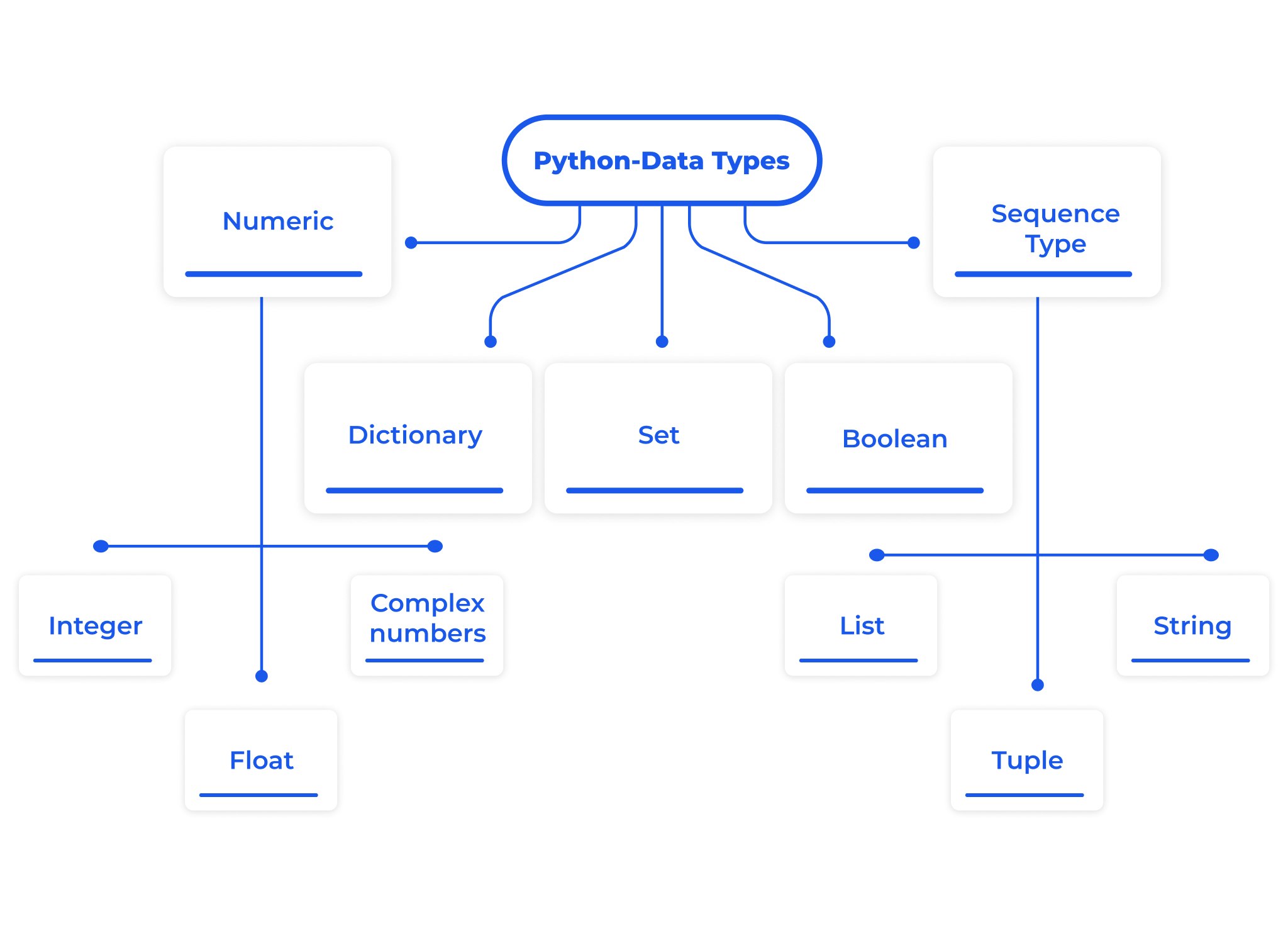
3. Name the various built-in data types of Python.
Python has several built-in data types that are commonly used in programming. Here are some of the fundamental ones -
- Numeric type which includes an integer, float, and complex numbers.
- Dictionary
- Set
- Boolean
- Sequence type includes string, tuple, list
4. What is the role of the _init_ method in Python?
The _init_ method in Python is a special method that is automatically called when an object is created from a class. It is commonly known as the constructor method. The primary purpose of the _init_ method is to initialise the attributes (or variables) of an object.
5. What do you understand about unit tests in Python?
Unit tests are codes written to test individual pieces of code such as functions, and classes. Python uses two frameworks to perform unit tests: PyTest and unit tests.
6. How do you create a class in Python?
In Python, a class can be created by using the keyword 'class' followed by 'class name'.
Below is an example of a class in Python -
class ClassName:
# Class attribute
7. How is a new modifier different from an override modifier?
The new modifier directs the compiler to use the new implementation. On the other side, an override modifier overrides a base function. Note that it occurs inside a child's class.
8. How will you identify a missing value in a Pandas DataFrame?
We can use the isna( ) or isnull( ) function to check whether any value is missing in a pandas DataFrame. This function returns a Boolean value if any value is missing in a Pandas column.
Example:
Input :
import pandas as pd

data = {'Name': ['John', 'Jane', None, 'Mike'],
        'Age': [25, 30, None, 35],
        'City': ['New York', 'London', None, 'Paris']}

df = pd.DataFrame(data)

# Identify missing values using isnull()

missing_values = df.isnull()

print(missing_values)
Output :
   Name    Age   City
0  False  False  False
1  False  False  False
2  True   True   True
3  False  False  False
₹ 49,000

Karthik was able to transform his career from a boring job to an
exciting job in software!
Talk to a career expert


9. How can you delete rows and columns from a DataFrame?
We can delete rows and columns from a DataFrame using the drop() method. The drop() method allows you to remove specific rows or columns by specifying their indices.
Example :
Input :
import pandas as pd

data = {
'Name': ['John', 'Jane', 'Mike', 'Emily'],
'Age': [25, 30, 35, 28],
'City': ['New York','London','Paris','Tokyo']}

df = pd.DataFrame(data)

# Delete rows with index 1 and 3

df = df.drop([1, 3], axis=0)

print(df)
Output :
    Name   Age    City
 0  John   25     New York
 2  Mike   35     Paris
10. Define subquery and name its types.
A subquery is nothing but a query nested inside a query or statement. The statements can be SELECT, UPDATE, INSERT, DELETE, etc.
Further, subqueries can be present inside the WHERE, HAVING, and FROM clauses. Another essential thing is that we can directly perform operations on specific rows with subqueries.
Here is a list of different subqueries used in SQL.
- Single row subquery
- Multiple column subquery
- Correlated subquery
- Multiple row subquery
- Nested subquery
11. What do you mean by view in SQL?
A view is a virtual table that we can create based on the results of a SQL statement. Like tables, a view consists of multiple rows and columns. The rows and columns of a view are essentially the rows and columns of one or more tables stored in a database.
We can create a view using the CREATE VIEW statement. Below is an example of the same.
CREATE VIEW view_name AS
SELECT column1, column2, column3,...
FROM table_name
WHERE condition;
12. What is an implicit cursor?
An implicit cursor is usually generated when we perform operations such as DELETE, INSERT, and UPDATE in databases. Besides, this cursor is used for internal processing.
13. What is the use of collation in SQL server?
Collations are nothing but a set of rules that we use to access, store, and compare data. They direct the database engine on handling the character data efficiently. Know that we can find collations on servers as well as databases.
14. What is the role of the recursive stored procedure?
The role of a recursive stored procedure is to execute a sequence of statements repeatedly until a certain condition is met. It allows you to perform iterative operations and solve problems that require repetitive logic or hierarchical data processing.
15. Is SQL a programming language?
SQL is not a general-purpose language (GPL) but a domain-specific language. It means we can use SQL to query and manage databases. As it is a domain-specific language (DSL), we can use SQL to solve only specific problems. We must note that we cannot use SQL to build applications.
16. Compare a unique key with a primary key.
| Unique Key |
Primary Key |
|
Unique key acts as a unique identifier in the absence of a primary key.
|
It acts as a unique identifier for all rows in a table. |
| By default, it generates a non-clustered index. |
By default, it generates a clustered index. |
| There can be one or more unique keys for a table. |
There can be a single primary key for every table. |
| We can alter the values of a unique key. |
We cannot change the values of a primary key. |
| It doesn’t support auto-incrementing values. |
It supports auto-incrementing values. |
| It accepts NULL values. |
It doesn’t take NULL values. |
17. Distinguish MySQL and SQL.
| MySQL |
SQL |
| It is a software that uses SQL as a query language. |
It is a query language. |
| It is open-source software. |
It is not an open-source tool. |
| It works on all platforms perfectly. |
It works well with Windows. But it doesn’t work perfectly with Linux and
macOS.
|
| It supports different storage engines. |
It helps only a single storage engine for making multiple operations.
|
| It doesn't support XML and user-defined functions. |
SQL supports them. |
18. How is BETWEEN operator different from IN operator in SQL?
When it comes to the BETWEEN operator, it returns all the data that lies between two values. The value can be a text, number, etc.
The syntax for the BETWEEN operator is given as follows -
SELECT column_name(s)
FROM table_name
WHERE column_name BETWEEN value1 AND value2;
However, the IN operator returns only the specified data. In other words, it retrieves a set of records that match the given values.
The IN operator's syntax is given as follows -
SELECT column_name(s)
FROM table_name
WHERE column_name IN (list_of_values);
19. Why do we use the DISTINCT keyword in SQL?
We use the DISTINCT statement to remove duplicate values from the result set of a SQL statement. Simply put, it returns only distinct values of the result set.
Generally, the DISTINCT keyword is used along with the SELECT keyword. It can also be used with aggregate statements such as COUNT, MAX, AVG, etc.
The main thing about this keyword is that it acts on a single column only.
20. Briefly describe garbage collection in Java.
It is the automatic memory management system used in Java. Generally, Java programs create objects on the heap while running on the JVM. The objects will be used by programs as and when required. However, some of the objects will remain unused. Garbage collectors delete unused objects and free up memory space.
21. What do you mean by Java Daemon Thread?
Daemon Thread in Java is a low-priority thread that does many background operations, such as action listeners, garbage collection, etc. In a way, a daemon thread is a 'service provide thread' that supports user threads extensively. The main thing is that the lifespan of this thread depends on the user threads. Once all the user threads are executed, the JVM terminates the daemon thread immediately.
22. What are the default values assigned to instance variables in Java?
The default value is zero for numbers. It is false for Boolean. Further, it is NULL for object references.
It is essential to note that the default values are assigned within a constructor.
23. Mention the different ways to create threads in Java.
We can create threads in Java in the following ways.
- By using a runnable interface. Also, we can create them overriding the run ( ) method. After that, we need to generate thread objects.
- We can also create threads by extending the thread class. This is because the thread class provides methods and constructors with which we can operate on threads.
24. What is a composition in Java, and list its uses?
It is a design technique used in Java to implement the 'has-a' relationship in classes. It is achieved with the help of instance variables. And these variables typically refer to objects. In composition, one object is contained in another object. Mainly, one object cannot exist without the other.
Following are the uses of composition -
- It supports multiple inheritances.
- It encourages the reuse of codes.
- We can change member objects at runtime.
25. Why doesn't Java use pointers?
Below are the reasons why Java doesn't use pointers -
- Pointers consume more memory
- Memory is directly accessed if we use pointers. It will raise security issues.
26. What is the difference between C and Java?
C programming is a procedural programming language where manual memory management is required while Java is an OOP language with automatic garbage collection. This implies that, if you are writing a program in Java, the object will automatically get access to the JVM (in the context of Java) but if you are in C language, you have to do it manually via the free() function.
The process is the same, but the outcome is different. Java converts all programs into bytecode that is then executed inside a virtual machine (JVM). After this, the byte code is built up and compatible with the existing OS, which has the Java Virtual Machine (JVM). But in C programming language, the compiler reads the code written and compiles it into the native binary instruction sets of the respective system’s microprocessor.
27. What is polymorphism in programming?
In programming, polymorphism (which originates from the Greek language and means "many forms") provides a common interface for applying diverse data types dealing with values of various data types. It simplifies coding by using object-oriented programming whose objects are treated as differentiable entities but controlled by a common interface.
Method Overriding is frequently used as the most important feature of polymorphism in object-oriented programming but it is not the only feature for the reason that polymorphism provides a mechanism for compile-time adaptation of different types at runtime. It enables the subclasses to be responsible for a particular implementation of a method that belongs to a superclass.
28. What is the way to create and utilize threads in Java?
It means an object can assume different forms and behave in different ways based on the context. In object-oriented programming, polymorphism enables different objects to result differently in the same message or call method.
Threads can be initiated by extending the Thread class or implementing the Runnable interface and subsequently, the start() function is used to begin. They can also be controlled using methods like join(), sleep(), and interrupt(). Threads allow for concurrent execution of tasks within a Java program.
29. What is the distinction between char and varchar in DBMS?
In a database management system, char defines a fixed-length character data type, and varchar refers to a variable-length character data type. To be more specific, a char column assigns always a fixed amount of storage while a varchar column allocates storage according to the data length.
30. How do you define an implicit cursor?
An implicit cursor is already built into the database management system (DBMS) to make handling the single-row queries possible without an explicit need to declare and open a cursor.
31. What is a proxy server?
A proxy server is a server that works like an intermediary between one user and several other servers. It blocks client requests towards another server and performs the requested operation on behalf of the client. Proxy servers can be used for different purposes such as restricting access to the internet, filtering content, and improving security and performance.
32. What do you understand by machine learning?
Machine learning is an AI technology that essentially constitutes the designing of data referencing software and principles for computers to learn. While humans achieve learning through various means like books, teachers, etc., machines execute that process using data instead of hard and fast rules. Machine learning methods are reflected in three diverse approaches: supervised learning, unsupervised learning, and reinforcement learning.
33. What is function overloading?
Function overloading allows multiple functions with the same name but different parameter lists to coexist within the same scope. The appropriate function to call is determined based on the number and types of arguments passed during the function call.
34. What do you know about Python?
Python is a high-level, interpreted programming language designed to be simple and allow the programmer to focus on the task at hand, rather than the syntax. It supports multiple programming paradigms and has a large standard library as well as a thriving ecosystem of third-party packages that allow programmers to do a wide range of things from web development to data analysis to artificial intelligence.
35. Explain Object Oriented Programming and its advantages.
Object-oriented programming (OOP) is a programming paradigm based on the concept of "objects," which can contain data and code to manipulate that data. OOP offers flexibility, code reusability, modularity, and ease of maintenance due to its encapsulation and abstraction principles.
Conclusion
In conclusion, preparing for a Deloitte interview requires a thorough understanding of the interview process and the types of questions you may encounter. While the specific questions can vary depending on the position and job location, there are common themes that Deloitte often explores.
Deloitte places emphasis on assessing your qualifications, skills, experiences, problem-solving abilities, teamwork, leadership potential, and alignment with their values and company culture.
Why It Matters?
A strong understanding of Deloitte’s interview expectations helps candidates present their skills with clarity, align with the firm’s values, and stand out in a competitive talent pool. It reduces uncertainty, boosts confidence, improves communication, and increases the likelihood of performing well in both technical and behavioral interview rounds.
Practical Advice for Learners
- Practice STAR responses with real examples.
- Review Deloitte’s values and connect them to your stories.
- Strengthen DSA + SQL + OOP fundamentals.
- Prepare for case studies and behavioral questions.
- Do mock interviews and record your answers.
₹ 49,000
Karthik was able to transform his career from a boring job to an
exciting job in software!
Talk to a career expert
Frequently Asked Questions
1. What types of interviews does Deloitte conduct?
Deloitte conducts various types of interviews, including behavioral interviews, case interviews, technical interviews, and competency-based interviews. The specific interview format may vary based on the position and level you are applying for.
2. How can I prepare for Deloitte technical interviews?
To prepare for technical interviews, review the technical aspects relevant to the position you are applying for. Refresh your knowledge of key concepts, frameworks, tools, or technologies and practice solving technical problems or answering technical questions.
3. Are there any specific qualities or skills that Deloitte looks for in candidates?
Deloitte typically looks for candidates with strong analytical and problem-solving skills, effective communication abilities, leadership potential, adaptability, and a client-centric mindset. Highlight these qualities in your responses and provide concrete examples that demonstrate how you have utilised these skills in your previous experiences.
4. How can I stand out during a Deloitte interview?
To stand out during a Deloitte interview, showcase your unique strengths, experiences, and perspectives. Be confident, demonstrate enthusiasm for the role and the organization, and show a genuine interest in contributing to Deloitte's success. Prepare well-researched questions, actively listen, and engage in meaningful conversations with the interviewers.
5. How to prepare for the Deloitte Interview?
Here are some of the tips to prepare for the Deloitte Interview:
- Research the Company: Learn about Deloitte’s services, values, and recent initiatives to show you're genuinely interested.
- Dress Professionally: Choose business formal attire to make a positive first impression.
- Be Confident and Authentic: Be yourself, stay composed, and demonstrate enthusiasm for the role.
- Ask Insightful Questions: Show you’ve done your homework by asking thoughtful questions about the company and role.
- Sell Yourself with Examples: Use the STAR method to highlight specific examples of your skills and achievements.
- Clarify Questions if Needed: If you don’t understand something, politely ask for clarification to give the best response.
- Follow-up: Send a thank-you email after the interview to express gratitude and reinforce your interest.
6. What are Group Discussion or JAM Topics Asked in the Deloitte?
Candidates can expect these kinds of Group Discussion/JAM topics at Deloitte:
- AI in Healthcare: Revolution or Risk?
- Technology and Climate Change: Startups – Boon or Bane?
- Can India Become a Manufacturing Superpower?
- The Role of AI in Business Disruption
- Impact of AI on Jobs
- Technology and Disaster Management
- Remote Work vs In-Office Work
- The Influence of Technology on Financial Crimes
- Social Media: Necessity or Not?
- The Future of Self-Driving Cars in India
- Electric Vehicles: The Future of Transportation
- Video Calls vs Voice Calls
- Technology in Sports
- The Rise of Analytics in Everyday Life
- Can India Leverage Technology to Combat Climate Change?



.avif)